Services
S·03 · Infrastructure
Systems
The best system makes good work easier to repeat and easier to improve.
For teams that have grown faster than their structure: founders who hold too much in their heads, organizations with work spread across tools and people, and teams introducing automation or AI without a shared model of how work should flow.

Fig. 1 — Operating structure
What this solves
01
Where systems work usually begins.
The work depends on a few people remembering how it is done.
Knowledge lives in inboxes and memory. When someone is away, work slows or stops.
Nobody is sure who decides.
Approvals stall, responsibilities overlap and the same questions are answered again each time.
Tools have multiplied without a plan.
Information sits in several places, none of them definitive, and the team spends time reconciling instead of working.
Automation or AI is being added piece by piece.
New tools arrive without a shared model of the workflow they are meant to support.
The discipline
02
Expression and structure, designed together.
Systems work looks beneath the visible output at the decisions, handoffs, knowledge and tools that determine how an organization actually operates.
I map what exists before proposing anything: who does what, where information lives, where work waits and why. From that map I design a clearer operating structure — workflows, roles, sources of truth and the documentation that holds them together.
The result is designed to be adopted, not only approved. A system works only if people use it, so it is written plainly, introduced gradually and built to be revised as the organization changes.

Fig. 2 — Ordered repetition
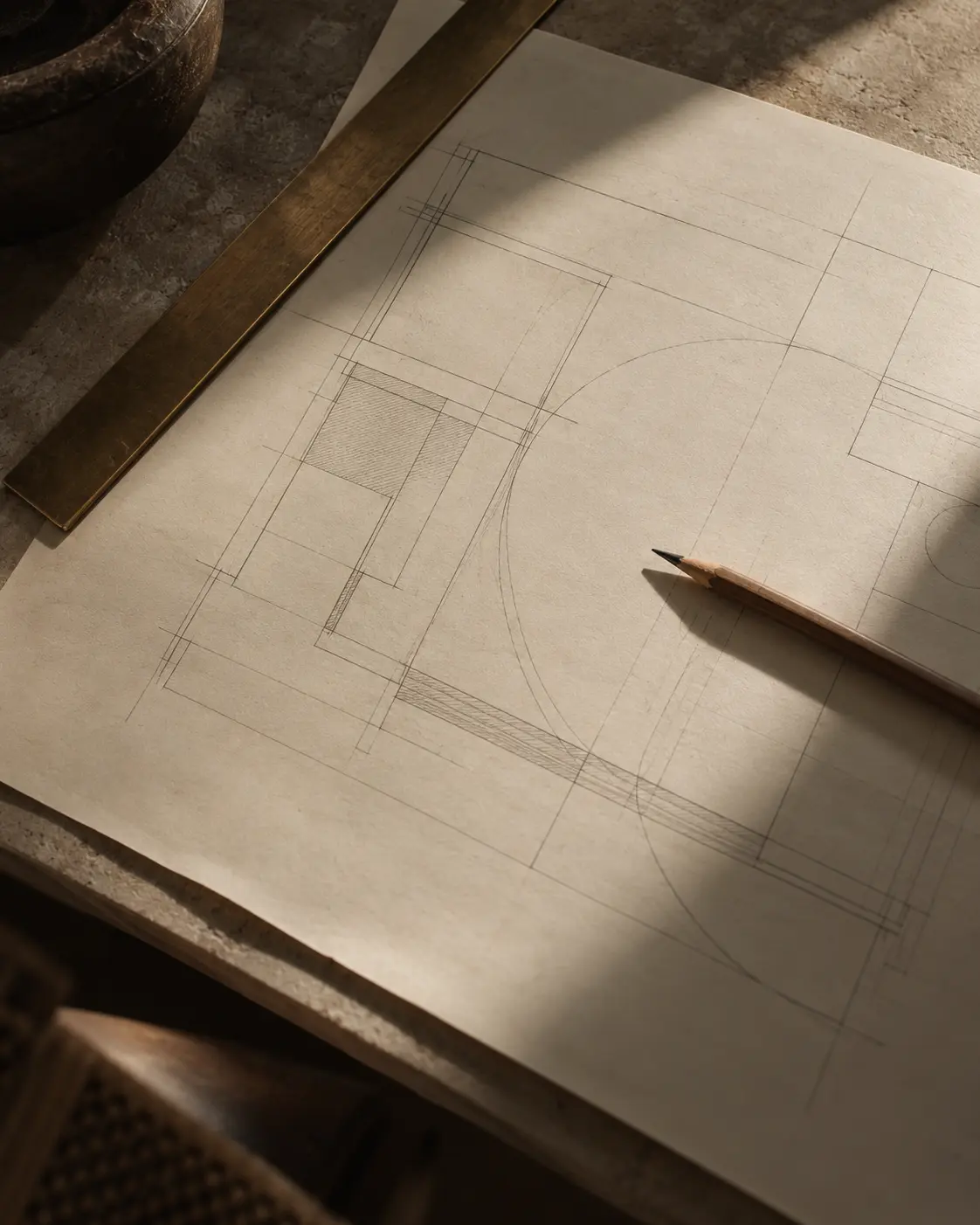
Fig. 3 — Plans and standards
Scope
03
What the work covers, and what it hands over.
Capabilities
- Workflow architecture
- Knowledge systems
- Governance structures
- Roles and decision rights
- Human + AI workflows
- Automation planning
Deliverables
- Current-state map of work, people and tools
- Workflow and process designs
- Roles, responsibilities and decision rights
- Knowledge base and documentation structure
- Implementation standards and templates
- Automation and AI workflow plan
- Onboarding and rollout plan
Process
04
How the work runs.
Map
Through interviews, observation and a review of existing tools and documents, I map how work currently moves: people, information, decisions and constraints.
Produces
A current-state map with the points of friction marked.
Design
I design the future operating structure — workflows, roles, decision rights and sources of truth — including where automation or AI should, and should not, take part.
Produces
An operating model and workflow designs.
Embed
The system is documented in plain language, introduced with the team and refined in use, so it can live beyond the engagement.
Produces
Documentation, standards and a rollout plan.
Working together
05
Ways to engage.
Focused intensive
A systems diagnostic: a concentrated review of one area of operations, such as client intake, hiring or project delivery, with a clear recommendation.
Defined project
The design and documentation of an operating system, workflow or knowledge base within a defined scope.
Ongoing systems partnership
Continued support while the system is adopted, checked against how the team actually works and refined as the organization changes.
What changes.
- More legible operations
- Stronger knowledge continuity
- Clear ownership and faster decisions
- Workflows that can scale with the team
Enquiries · S·03
If the work depends on people remembering how everything operates, it is time to build the system.
Describe the part of the organization that feels hardest to run. I will reply with how I would map it.
Start a systems conversation ↗Available for select projects — 2026
Other ways to get in touch ↗